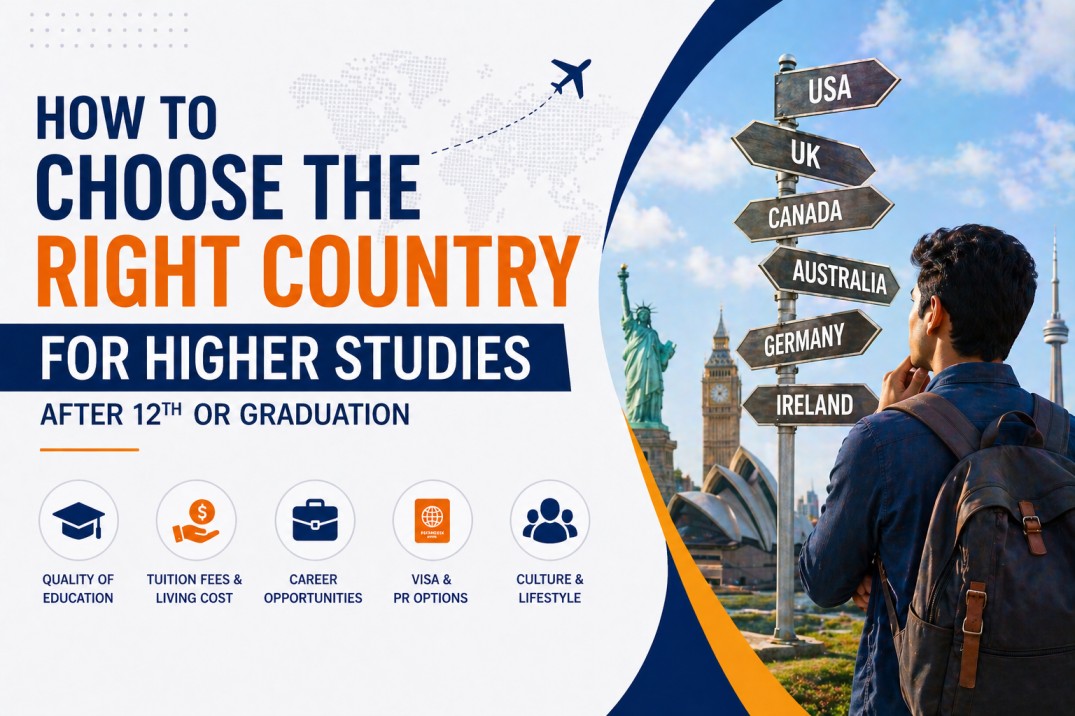
How to Choose the Right Country for Higher Studies After 12th or Graduation
Every year thousands of Indian students plan to pursue international education. However, the most common question students and parents ask is:
“Which is the best country to study abroad?”
The truth is, there is no single answer that fits everyone. The right destination depends on your academic profile, career goals, financial planning, and long-term aspirations. Students who approach this decision strategically often achieve better academic outcomes and avoid costly mistakes during the admission or visa process.
If you are planning study abroad after 12th or study abroad after graduation, this guide explains how to evaluate destinations carefully and select the country that aligns with your goals.
Choosing the Right Country for Higher Education – A Strategic Approach
Selecting a country for higher education is not just about rankings or popularity. It requires a structured evaluation of multiple factors including academic pathways, financial readiness, industry exposure, and visa regulations.
Students who rush this decision based on trends or peer influence often face issues such as:
- Choosing programs that do not match their career goals
- Underestimating total education costs
- Facing visa complications due to poor documentation planning
- Limited job opportunities after graduation
A strategic approach helps students make informed choices that support long-term academic and career growth.
Academic Fit
The first step in selecting the right study destination is understanding your academic pathway.
Different countries offer different education structures, teaching styles, and program formats.
Undergraduate Pathways (After 12th)
Students planning study abroad after 12th usually pursue undergraduate degrees in areas such as:
- Business Administration
- Computer Science
- Engineering
- Hospitality Management
- Media & Communication
Countries like the USA, UK, Canada, and Australia offer diverse undergraduate programs with flexible academic structures.
Dubai and other international education hubs also provide globally recognized degrees through branch campuses of international universities.
Students should evaluate:
- Course structure
- Program duration
- Internship opportunities
- Accreditation and global recognition
Postgraduate Pathways (After Graduation)
Students pursuing study abroad after graduation typically apply for postgraduate programs such as:
- Master’s in Data Science
- MBA or Business Analytics
- Engineering specialization programs
- Public Health or Healthcare Management
Postgraduate programs may be research-focused or coursework-based.
Research Programs
Countries like the USA and Germany are known for strong research ecosystems where students work closely with faculty on innovation projects.
Coursework Programs
Countries like the UK, Canada, and Dubai offer structured coursework programs designed for practical industry skills.
Choosing the right academic environment improves learning outcomes and career prospects.
Budget & Financial Planning
Financial readiness is one of the most important aspects of studying abroad.
Many students focus only on tuition fees while ignoring other expenses such as accommodation, living costs, visa fees, health insurance, and travel.
A realistic budget should include:
- Tuition fees
- Living expenses
- Health insurance
- Visa and immigration costs
- Study materials and transportation
Estimated Annual Cost Ranges
USA
Higher tuition but strong career opportunities.
UK
Shorter postgraduate programs which can reduce overall cost.
Canada
Balanced tuition and strong post-study work opportunities.
Dubai
Moderate tuition with relatively lower overall study cost.
Germany
Public universities with low tuition but competitive admissions.
Financial planning may involve scholarships, savings, or education loans. Students should carefully assess their budget before selecting a destination.
Career Outcomes
Another critical factor when choosing a country is career potential after graduation.
Students should ask themselves:
- Is the country strong in my chosen industry?
- Are there internship opportunities during the program?
- Do international graduates get access to the job market?
Countries with strong industry ecosystems provide better exposure.
Examples of Industry Alignment
USA
Technology, Artificial Intelligence, Research
Canada
Healthcare, IT, Business Analytics
UK
Finance, Business, Media
Germany
Engineering, Automotive Industry
Dubai
Business, Hospitality, Aviation, Logistics
Students who align their education with industry demand significantly improve their employment prospects.
Internship and Industry Exposure
Internships play an important role in international education.
Many universities encourage students to participate in:
- Industry training programs
- Internships
- Research assistantships
- Capstone projects
These experiences help students gain practical knowledge and build professional networks before entering the job market.
Countries with strong corporate ecosystems often provide better internship opportunities.
Visa & Work Policies
Visa regulations and work policies vary widely between countries.
Understanding these policies early helps students plan realistically.
Part-Time Work During Study
Many countries allow students to work part-time while studying. This helps students gain work experience and manage living expenses.
For example:
USA
Students can work on campus during study programs.
Canada
Students may work part-time during academic sessions.
UK
Students can work limited hours during term time.
Dubai
Students may participate in internships or work opportunities with approvals.
Post-Study Work Opportunities
Some countries offer structured pathways allowing students to stay and work after completing their degree.
Examples include:
Canada
Post-Graduation Work Permit (PGWP)
UK
Graduate Route Visa
USA
Optional Practical Training (OPT)
Dubai
Employment-based residence opportunities after securing jobs
Students planning long-term international careers should consider these policies carefully.
Why Professional Counseling Reduces Risk
Many students rely on incomplete information from online forums or social media when choosing a study destination. While online research is helpful, it cannot replace professional evaluation.
Professional study abroad counseling in Bhopal helps students make informed decisions based on:
- Academic background
- Career goals
- Financial readiness
- Visa feasibility
A structured counseling process can help students:
- Select the right country and course
- Shortlist suitable universities
- Prepare strong applications
- Avoid documentation mistakes
- Understand visa requirements clearly
Working with experienced counselors reduces uncertainty and improves the chances of a smooth application process.
Final Thoughts
Choosing the right country for higher education is a strategic decision that influences academic success, financial planning, and long-term career opportunities.
Instead of following trends or relying on peer advice, students should evaluate:
- Academic fit
- Budget and financial planning
- Career opportunities
- Visa policies
- Industry exposure
A thoughtful approach ensures that your international education investment delivers meaningful results.
Get Your Profile Evaluated Before Choosing a Country
If you are planning study abroad after 12th or study abroad after graduation, start with a structured evaluation of your academic profile and career goals.
Professional study abroad counseling in Bhopal can help you identify the most suitable countries, universities, and programs based on your strengths and long-term plans.
Book a profile evaluation today and take the first step toward selecting the right international study destination.
👉 Read next: Step-by-Step Guide to the Study Abroad Application Process (2026 Edition)
Learn how to apply to foreign universities correctly, including profile evaluation, university shortlisting, SOP and LOR preparation, and visa processing.